Context
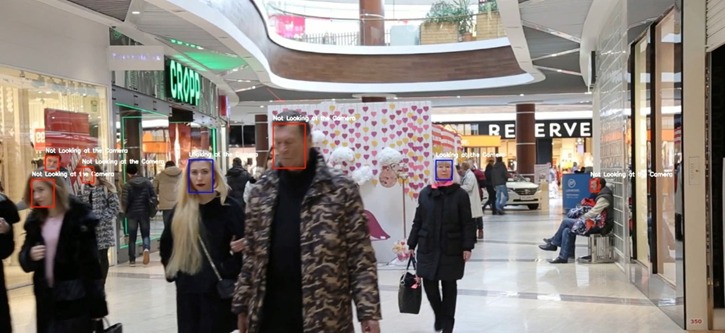
The TPL Trakker AI application was designed to transform live camera input into audience insight data. Instead of capturing only generic video, the system interpreted people flows and demographic cues in real time, producing meaningful measurements such as total counts, gaze indicators, and gender distribution. The goal was to support smarter analytics for environments where visitor attention and engagement matter, such as retail, events, and public-facing displays.
The application brings detection, classification, and reporting together in one workflow. It logs useful summaries over time and presents a user-friendly operational interface while retaining a strong technical backbone in computer vision and model inference — built to be run by an operator, not just demonstrated by an engineer.
02Real time, and actually usable
The real challenge was building an analytics workflow that could operate in real time while remaining practical to run and monitor. The system had to detect human presence, classify faces, estimate whether a person was looking toward the camera, and store the results in a structured way. On top of that, it needed a GUI for easy control and a logging system for hourly and final summaries.
This required balancing detection reliability, model performance, and usability. The app needed to run as a usable product rather than just a research experiment, so it included a user interface, persistent logging, and a re-login model that enforced periodic access checks.
03A layered detection pipeline
The application was built around a layered detection pipeline. Human detection was performed using YOLOv8, which identified people in the video frame and localized them with confidence scores. For face-related analysis, the system used OpenCV Haar Cascade and then classified gender using a Vision Transformer (ViT) model from Hugging Face — combining object detection with identity-aware analysis in real time.
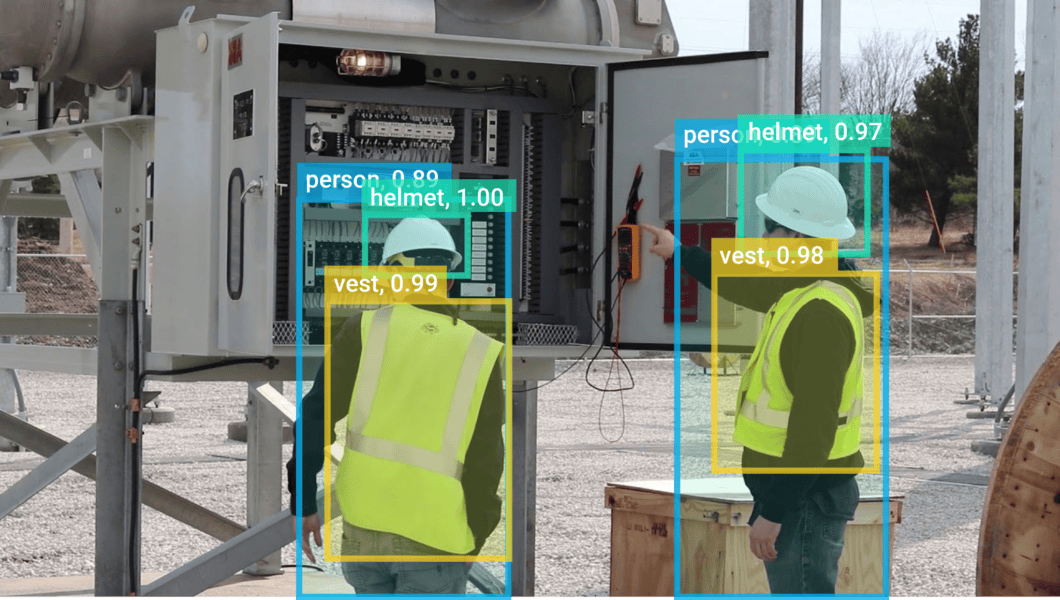
The project also included a monitoring layer that stored CSV logs, accumulated hourly summaries, and created final session reports at the end of a run. A Tkinter-based GUI allowed the operator to start and stop detection cleanly while keeping the process responsive, and requiring login every 30 days added a simple access-control layer appropriate for a working application rather than a one-off script.
04Four layers, one pipeline
Video intelligence
The system used computer vision models to detect people in the frame and locate faces for further analysis, turning live footage into structured analytics.
Classification and logging
Face crops were processed for gender classification while the app logged hourly counts, summaries, and event-level outputs to CSV files for later review.
Operational interface
Tkinter provided a simple front-end for start/stop control, while the detection logic ran in a dedicated thread to keep the interface responsive during processing.
Reporting
Outputs were summarized into per-hour and end-of-session reports so the system could support analysis beyond raw frame-level observation.
Results and lessons
The project shows how a practical AI application can move beyond experimentation and become a monitoring tool. It converts passive video streams into active insight: people counts, gender distribution, attendance trends, and attention-oriented metrics — especially valuable in public spaces, storefronts, and presentation environments where understanding audience response can inform more effective decisions.
The larger takeaway is that impactful AI systems are not only about model performance — they also depend on data handling, usability, and a clear reporting layer. TPL Trakker AI demonstrates this well: the technical pipeline does the inference, but the application value comes from turning that inference into useful, structured operational knowledge.