Context
Agricultural productivity is highly sensitive to pest outbreaks. Early detection can reduce crop loss, lower pesticide usage, and help farmers make informed intervention decisions. This project explored a low-cost monitoring approach based on the ESP32-CAM to capture field images and support pest detection workflows.
The appeal of the ESP32-CAM specifically was that it put camera-based monitoring within reach of a smallholder budget: a single low-cost module could sit in the field and produce the imagery needed for a human or an automated system to spot pest activity, rather than requiring dedicated agronomy staff to walk every row on a fixed schedule.
02Invisible until it isn't
Pests often remain invisible until their spread becomes significant. The challenge was designing a compact, affordable monitoring system that could operate outdoors, capture useful crop imagery, and support timely identification without requiring expensive infrastructure.
That meant working within real field constraints from the start: the camera had to survive an outdoor environment, the imagery had to be useful enough to support an actual inspection decision, and the whole approach had to stay cheap enough that deploying more than one unit across a field was realistic rather than aspirational.
03What was built
The project used an ESP32-CAM as the sensing node for capturing images from the field. These images were then used to support visual inspection for pest activity, creating a practical path toward automated field monitoring.
The aim was not only to collect data, but to turn the data into actionable insight for agronomic decisions — imagery that a grower or an automated trigger could actually act on, rather than a stream of photos nobody had time to review.
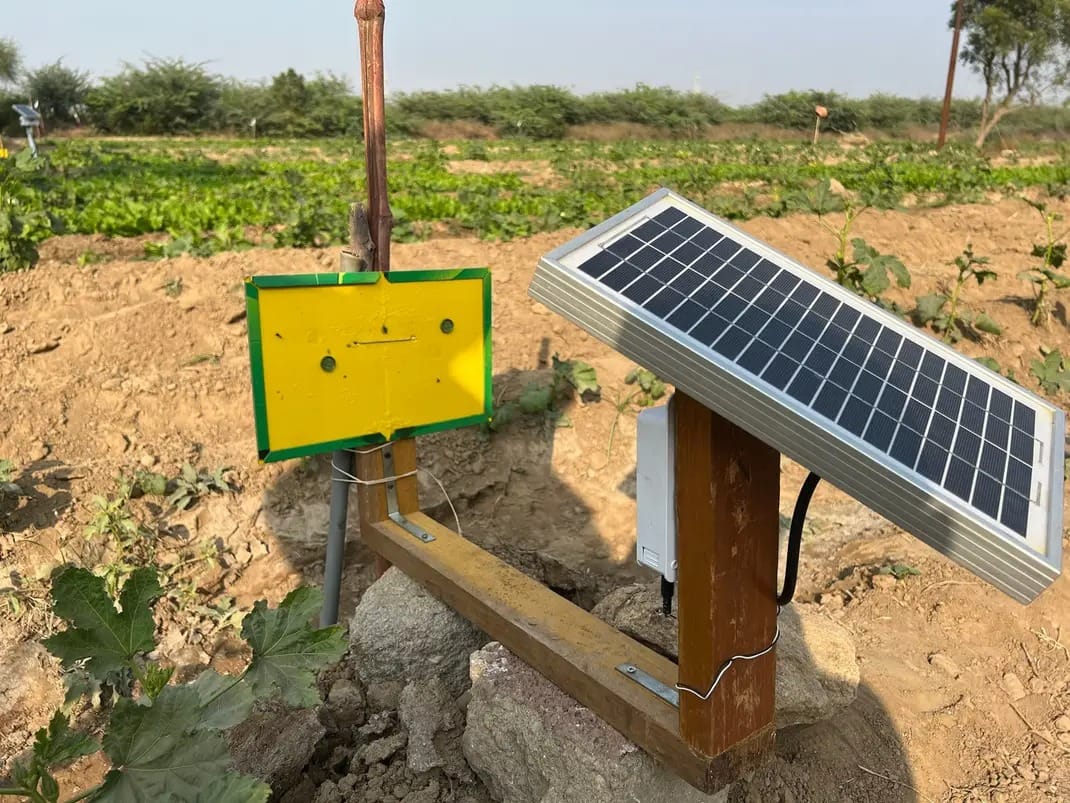
04System thinking
Results and lessons
This concept highlighted the value of combining embedded hardware with image-based monitoring to solve practical agricultural problems. Even at concept stage, it showed a concrete path from a cheap camera module to a usable early-warning signal for pest activity.
It reinforced a broader lesson in sustainable engineering: small, affordable sensing systems can produce meaningful operational insight when designed around real field constraints instead of chasing capability the deployment budget can't support.